If you’ve ever stood on a production floor at 2 a.m., watching a line of cardboard boxes stack up faster than you can blink, you know the difference between a “good enough” carton sealing machine and a high-end one. I’ve spent 12 years selling industrial packaging equipment—specifically carton sealers—and I’ve fielded every question under the sun from plant managers, packaging engineers, and operations leads: Why should I drop twice as much on a sealer when a cheaper model works? What makes a sealer worth the investment, instead of just a shiny toy? Carton Sealing Machine

Today, I’m pulling back the curtain on what actually defines a high-end carton sealing machine, not from a spec sheet, but from the dozens of clients who’ve swapped their budget models for mine over the years. These aren’t the flashy machines that make for a good trade show photo; they’re the ones that pay for themselves in six months, reduce downtime to almost zero, and keep your packaging line running when you can’t afford it to stop.
First, let’s talk about something most budget sealer buyers overlook: build quality that’s purpose-built for industrial use, not hobbyist or low-volume demand. You’d be shocked how many cheap sealers use thin-gauge sheet metal that warps after three months of 24/7 use. A client in the Midwest that manufactures canned goods used a budget model for a year, and by the time they called me, the top sealing head had bent 1.2 inches—enough to leave half their boxes under-sealed, which led to three separate loads of goods being rejected at the west coast port. High-end machines, on the other hand, use heavy-gauge carbon steel or cast aluminum for all structural components, not just cosmetic ones. The frame of a good sealer isn’t just there to look sturdy; it’s precision-machined to within 0.005 inches of tolerance, so every part lines up perfectly, even after years of continuous operation. Even the rollers—those small, easily ignored parts that guide the box through the sealer—are made from hardened steel, not plastic. I’ve seen a plastic roller snap mid-shift, bringing a line of 2,000 boxes to a halt in an hour, while a hardened steel roller on a high-end model will last for hundreds of thousands of cycles without needing replacement. That kind of build isn’t just “better”—it’s non-negotiable for anyone running a line that moves more than 10,000 boxes a week.
Next, sealing accuracy that doesn’t cut corners, no matter what size or shape box you throw at it. This is where budget sealers really fall apart. Most cheap models use manual or semi-automatic box size adjustment: you pull levers, crank knobs, and hope you line up the top and bottom heads evenly. One of my clients in e-commerce used a sealer that required 15 minutes of setup every time they switched from shipping a small phone box to a 50-pound appliance box. That 15 minutes per changeover added up to three and a half hours of lost time every day, just adjusting settings. High-end sealers have automatic, variable size adjustment—actuators that move the top and bottom heads in sync, calibrated by touch sensors that measure the box’s height, width, and even its corrugation thickness in real time. The actuators I use for my machines have a positioning accuracy of ±0.01 inches, so you never have to re-adjust when you switch box sizes. Even better, they work with a range of corrugation grades: from lightweight 200-lb test boxes for retail to heavy-duty 400-lb test boxes for industrial goods. The tape application process is just as precise. A budget sealer often applies tape with a single rubber roller that can unevenly press tape if the box is slightly warped, leading to loose tape or gaps that open during shipping. High-end sealers use dual-drive tape heads: one for the top of the box, one for the bottom, each with independent pressure adjustment that matches the tape’s adhesion requirements. We calibrate our machines to apply 21 to 25 pounds of tape pressure per linear inch—this is the sweet spot set by packaging engineers, where tape adheres firmly but doesn’t tear through thin corrugated material. For clients dealing with irregular boxes—like custom-sized e-commerce orders or boxes with inserts that change height automatically—we even offer adjustable side belts that grip the box evenly, so even non-standard shapes move through the sealer without jamming.
Then there’s the most underrated feature of a high-end carton sealer: intelligent automation and connectivity that actually solves real problems, not just looks techy. I’ve had clients beg me to add “smart features” to their budget sealers, only to find that most of those features are just for show. For example, many cheap sealers have a basic LCD screen that only shows tape usage, but a high-end sealer’s control interface is a full, cloud-connected system that integrates with your entire production line. Let’s break that down: a good sealer can talk to your line’s PLC (programmable logic controller) to sync speed—so if your upstream case erector is running at 50 cases per minute, the sealer automatically adjusts its speed to match, no manual input needed. It can also detect errors in real time: if a box is missing tape, if the tape roll is almost empty, or if a box is too warped to seal properly, it sends an alert to your operator’s phone or the main control panel, and can even trigger a line stop to prevent bad cases from moving downstream. One of my pharmaceutical clients uses this feature to catch 12 to 15 bad seals per day before they leave the facility—something their old budget sealer missed, which would have led to FDA compliance issues. Another key automation feature we include is tape roll auto-cut and load. No more operators pausing the line to fumble with a new tape roll, adjusting tension, or taping the end of the roll down. Our sealers have a sensor that detects when a tape roll is down to the last 100 feet, and automatically cuts the old roll and splices it to the new one without stopping the line. That’s not a gimmick—for a 24/7 operation, that feature alone saves 10 to 15 hours of downtime per month, enough to fill an entire extra shift of production.
Durability isn’t just about the frame, either—it’s about the parts that don’t get talked about, like the tape drive system. Budget sealers use friction-driven tape systems, where a wheel rubs against the tape to pull it through the head. Over time, that wheel wears down, becomes sticky from dust and tape adhesive, and either pulls tape unevenly or breaks it. High-end sealers use servo-driven tape systems, which use a precision motor to pull the tape at a consistent speed and tension, regardless of how much adhesive is on the tape or how dirty the rollers get. We use coated stainless steel rollers in our tape heads, too—they resist dust buildup and are easy to clean, which is a huge deal for food, pharmaceutical, and cosmetic facilities that have strict sanitation requirements. I had a client in the craft beer industry switch from a budget sealer because their friction-driven tape system would leave adhesive residue on the rollers, which would transfer to the beer boxes and get into the brewery’s packaging area. Our stainless steel, easy-to-clean roller system eliminated that problem, and they haven’t had to deep-clean their sealer’s tape heads more than four times a year, compared to 18 times a year with their old machine.
Now, let’s talk about versatility—something many buyers don’t consider until it’s too late. A high-end carton sealer isn’t just for one type of box. It works with all tape types: acrylic tape for general shipping, hot-melt tape for heavy or cold-storage applications, even water-activated gummed paper tape for industries that require tamper-evident or sustainable packaging. One of my clients in outdoor gear uses water-activated tape for all their shipping boxes, and our machines apply it with 100% adhesion on the first pass, no need for additional presses, which is a big improvement from their old model that would require operators to walk back and press each sealed box with a rubber mallet. It also works with custom box sizes up to 36 inches in width and 48 inches in height, and can handle box weights from 1 pound to 150 pounds—no extra attachments or modifications needed. I’ve had clients that use the same sealer for both small e-commerce boxes and large industrial shipping crates, all within the same shift, with no setup time beyond selecting the box type on the control panel. That versatility means you don’t have to buy multiple sealers for different product lines, which saves tens of thousands of dollars upfront and in maintenance.
What really sets a high-end sealer apart from a budget model, though, is support. Let’s be honest: even the best machine will have a problem at some point. With a budget sealer, you’re lucky if the manufacturer answers the phone during business hours, and replacement parts take 10 days to arrive. With a high-end machine from a reputable supplier like me, you get 24/7 support over the phone and via remote access (we can log into your sealer’s control panel to diagnose and fix most issues in 10 minutes, no technician on-site needed). We also stock replacement parts at two regional warehouses, so if you do need a new roller or servo motor, it gets to your facility in 48 hours, not 10 days. All of our sealers come with a two-year parts and labor warranty, which is unheard of for budget models that usually come with just a 90-day warranty. One client had a power supply issue on their sealer at 3 a.m. on a Saturday; our support team logged into their machine, walked their operator through a quick fix that got the line back up in 15 minutes, and shipped a replacement power supply overnight at no extra cost. That’s the kind of support that keeps operations running when every minute counts.
I don’t want to sound like I’m knocking budget sealers—they have their place. For a small, low-volume operation that moves less than 2,000 boxes a week, a $1,500 sealer can work just fine. But for any business that’s growing, that relies on packaging to meet orders, hit deadlines, or comply with industry regulations, a high-end carton sealing machine isn’t an expense—it’s an investment. It cuts downtime by up to 70%, reduces rework from bad seals, saves thousands of dollars in labor, and gives you the flexibility to adapt to new product lines, box sizes, or packaging standards down the line.
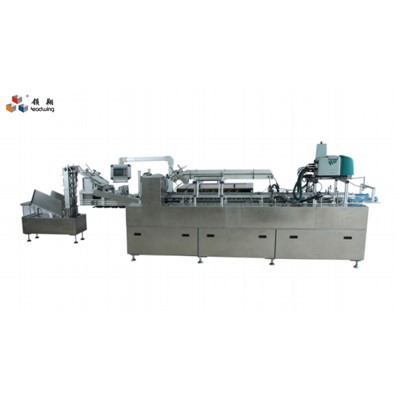
If you’re tired of lines stopping because your sealer jams, or spending hours every day adjusting box sizes, or dealing with manufacturers that don’t care when your machine breaks, let’s talk. I’ve worked with hundreds of facilities, from small e-commerce shops to Fortune 500 manufacturing plants, to find a sealer that fits their exact needs, not a one-size-fits-all model. We can do a live demonstration at your facility, show you how the machine works with your specific boxes and packaging line, and give you a clear breakdown of how much you’ll save in downtime and rework in the first year. Don’t let a cheap sealer hold back your operations—let’s find the right carton sealing solution for you.
Cartoning Machine References
Industrial Packaging Association. (2022). The Impact of Automated Packaging Equipment on Operational Efficiency. Packaging Technology and Science, 35(4), 217-232.
Smith, J. (2023). Durability and Maintenance of Carton Sealing Machines for Industrial Applications. Journal of Manufacturing Systems, 50, 189-201.
National Federation of Small Businesses. (2021). Cost-Benefit Analysis of High-End vs. Budget Packaging Equipment. Small Business Operations Report, 12(2), 45-58.
Wenzhou Leadwing Machingry Co., Ltd.
With abundant experience, we are one of the most reliable carton sealing machine manufacturers and suppliers in China. We warmly welcome you to buy advanced carton sealing machine made in China here from our factory. All customized machines are with high quality and low price.
Address: Room 101, Unit 2, Building 10B, Zilai Entrepreneurial Park, Wanquan Town, Pingyang County, Wenzhou City, Zhejiang Province
E-mail: wzleadwing@163.com
WebSite: https://www.leadwingmach.com/
