If you’ve ever pulled up to a gas station for your car, you expect to fill up and go—no weird delays, no out-of-the-blue “we’re out of fuel” sign hanging on the pump. For LNG stations, that same expectation isn’t just about convenience; it’s make-or-break for every trucking fleet, industrial site, or power plant that relies on us to keep their operations running smoothly. As someone who’s been part of the LNG station supplier game for over 12 years, I can tell you this isn’t luck—it’s a lot of behind-the-scenes work we do to make sure supply never drops the ball. LNG Stations

First off, let’s talk about something most folks don’t see: the redundant systems we build into every station. I’ve worked with sites that cut corners on back-up stuff, and it’s never pretty. Last year, a small truck stop nearby lost power for 8 hours during a storm because they only had one generator. We designed every station we sell with two full backup power units—not just for the main compressors or pumps, but even for the control systems that track fuel levels and send orders to our supply team. That means if one generator goes kaput, the second kicks in instantly. No gaps, no “wait 20 minutes while we get the other one running” nonsense. We also add extra piping loops that let us bypass a faulty section without shutting down the whole station. A client in Texas had a pipe leak a couple months back—instead of closing for 3 days like they thought, we flipped the bypass switch and fixed the leak in 4 hours. The trucks kept rolling, no lost revenue for them.
Next, it’s all about the supply chain, and we don’t leave that to chance. Too many station operators just sign a contract with a single LNG supplier and cross their fingers, but that’s a recipe for disaster. We work with a network of 4 separate, certified LNG producers—think of it like having four grocery stores on call, so if one’s down for maintenance, the other three can pick up the slack. We also built our own satellite tracking system for every delivery truck. Each tank on our stations has a sensor that tells us exactly how much fuel’s left 24/7, down to the last gallon. If the level hits a pre-set threshold (we let operators adjust that, usually around 20% of tank capacity), the system automatically sends a request to the closest available delivery truck. No human error, no forgotten orders. Last winter, when a major producer had a pipeline issue that cut their output by 40%, our clients never noticed—we just shifted volumes from the other three producers and rerouted deliveries to cover the gap.
Wait, speaking of winter—cold weather is LNG’s Kryptonite, right? Frozen pipes, pressure drops, equipment seizing up. We design all our stations with weatherized parts that can handle temps as low as -40°F, which is way colder than most of the US (or even Europe, for that matter) ever gets. But we also add a heated trace system to every single pipe and pump, not just the main ones. I’ve seen stations that only heat the big pipes, and the small ones leading to the pumps freeze solid overnight. Our trace system uses low-energy heating strips that turn on only when temps drop below freezing, so we don’t waste power, but they’re reliable enough to keep lines clear even during a blizzard. We also do a pre-winter check for every station we sell—something most suppliers skip. We go through every heater, every sensor, every backup part, top off any extra fluids, and even test the generators in freezing conditions. Last year, a client in Minnesota had a cold snap that lasted 10 days straight. All their competitors’ stations were closed due to frozen equipment, but our client never shut down once. They told us their trucks saved over $15,000 that week alone.
Then there’s regular maintenance, but not the “once a year checkup” kind that some places do. We call it predictive maintenance, and it’s a game-changer. Every station we sell has built-in monitoring software that tracks equipment performance in real-time—like how much power a pump’s using, how fast it’s compressing LNG, even tiny vibrations that signal a part is about to fail. We get alerts on our end and the operator does too. Last month, a client in Ohio got an alert that one of their pressure valves was running 10% hotter than normal. The technician went out, tightened a seal, and avoided a full valve replacement that would’ve shut down the station for 2 days. Compare that to old-school maintenance, where you’d wait for something to break and then fix it—costly, messy, and bad for supply. We also include a quarterly on-site check for all our clients, so we can catch small issues before they turn into big ones. No extra fees, it’s part of the package when you work with us.
Oh, and let’s not forget about safety, which is tied straight to reliability. If an LNG station has a safety incident, it gets shut down immediately, no questions asked. So we build every station with redundant safety systems too—like dual leak detectors that trigger an alarm and shut off fuel flow if there’s even a tiny LNG vapor leak. We also train all our clients’ staff on proper operation, but we have a 24/7 support line that’s staffed by LNG experts, not random call center reps. Last quarter, a night shift operator in Wyoming smelled something off at 2 a.m. He called our line, and the tech on the other end walked him through checking a seal, which was loose—fixed it in 15 minutes, no shutdown, no harm done. Most suppliers have support during 9-to-5 weekdays; we’re there 24/7, 365 days a year, because emergencies don’t wait for business hours.
I know a lot of new station operators think reliability is just about having a big tank and a pump, but that’s the opposite of the truth. It’s the tiny, planned-for things—the extra generator, the backup supply lines, the predictive sensors, the 2 a.m. support—that keep fuel flowing when everything else goes wrong. We’ve been doing this long enough to know that one bad supply day can make a client switch to your competition, so we don’t cut corners. Every station we sell is built like it’s our own business depending on it, because honestly, it is.
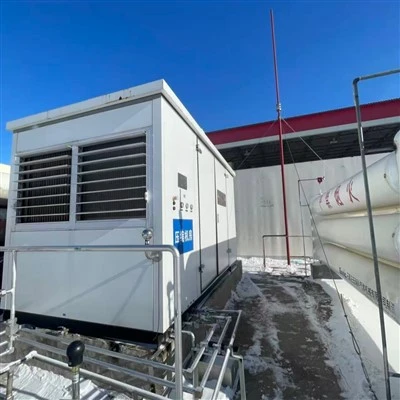
If you’re thinking about setting up an LNG station and you’re tired of dealing with supply hiccups, unreliable equipment, and support that’s MIA after 5 p.m., hit us up for a chat. We can walk you through our station designs, talk about the network of suppliers we work with, and even share case studies of how we’ve kept our clients running through storms, pipeline issues, and everything in between. No sales pitch, just straight talk about making sure your LNG supply never lets you down.
CNG Mother Station References
- U.S. Energy Information Administration. (2022). LNG Infrastructure and Supply Chain Resilience.
- International Organization for Standardization. (2021). Standards for LNG Station Design and Reliability.
- American Petroleum Institute. (2020). Predictive Maintenance Practices for LNG Fueling Stations.
Qingdao Lenado Intelligent Equipment Co., Ltd.
Qingdao Lenado Intelligent Equipment Co., Ltd. is one of the most experienced LNG stations manufacturers and suppliers in China. We have world-leading production equipment and strong manufacturing capabilities. Please rest assured to wholesale bulk customized LNG stations from our factory.
Address:
E-mail: genkegasstation@163.com
WebSite: https://www.cnggasstation.com/
