Hey there! I’m a supplier of globe valves, and I often get asked about the difference between manual and automatic globe valves. So, I thought I’d write a blog post to clear things up. Globe Valve
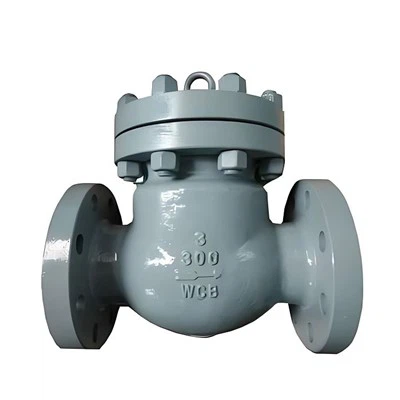
Let’s start with the basics. A globe valve is a type of valve used to control the flow of a fluid through a pipeline. It gets its name from its spherical body, which has an internal baffle that divides the flow path. Globe valves are commonly used in a wide range of industries, including oil and gas, water treatment, and power generation.
Now, let’s talk about the difference between manual and automatic globe valves.
Manual Globe Valves
Manual globe valves are the most basic type of globe valve. They’re operated by hand, using a wheel or a lever. When you turn the wheel or lever, it moves a stem that’s connected to a disc inside the valve. The disc then moves up or down, either allowing or blocking the flow of fluid through the valve.
One of the biggest advantages of manual globe valves is their simplicity. They’re easy to operate and don’t require any external power source. This makes them a popular choice for small-scale applications or in areas where electricity isn’t readily available.
Another advantage is their reliability. Manual globe valves have fewer moving parts than automatic valves, which means there’s less that can go wrong. They’re also less expensive to purchase and maintain than their automatic counterparts.
However, manual globe valves do have some limitations. For one, they require physical effort to operate. This can be a problem in applications where the valve needs to be opened and closed frequently or in areas where access to the valve is difficult.
Another limitation is their response time. Because they’re operated by hand, it can take some time to open or close a manual globe valve. This can be a problem in applications where quick response times are required, such as in emergency shut-off situations.
Automatic Globe Valves
Automatic globe valves, on the other hand, are operated by an external power source, such as electricity, air, or hydraulic pressure. They use a motor or an actuator to move the stem and the disc inside the valve, allowing or blocking the flow of fluid.
One of the biggest advantages of automatic globe valves is their convenience. They can be controlled remotely, either manually or through a control system. This makes them a popular choice for large-scale applications or in areas where access to the valve is difficult.
Another advantage is their fast response time. Automatic globe valves can be opened or closed in a matter of seconds, making them ideal for applications where quick response times are required.
Automatic globe valves also offer more precise control over the flow of fluid. They can be programmed to open or close at specific intervals or in response to specific conditions, such as changes in pressure or temperature.
However, automatic globe valves do have some drawbacks. For one, they’re more expensive to purchase and maintain than manual globe valves. They also require an external power source, which can be a problem in areas where electricity or other power sources aren’t readily available.
Another drawback is their complexity. Automatic globe valves have more moving parts than manual valves, which means there’s more that can go wrong. They also require more technical expertise to install and operate.
Which One Should You Choose?
So, which type of globe valve is right for you? Well, it depends on your specific application and requirements.
If you’re looking for a simple, reliable, and inexpensive valve for a small-scale application, then a manual globe valve might be the way to go. They’re easy to operate and don’t require any external power source.
On the other hand, if you’re looking for a valve that offers convenience, fast response times, and precise control, then an automatic globe valve might be a better choice. They’re ideal for large-scale applications or in areas where access to the valve is difficult.
Ultimately, the decision comes down to your specific needs and budget. If you’re not sure which type of globe valve is right for you, don’t hesitate to contact us. We’re here to help you find the perfect valve for your application.
Conclusion
In conclusion, there are some significant differences between manual and automatic globe valves. Manual valves are simple, reliable, and inexpensive, but they require physical effort to operate and have a slower response time. Automatic valves, on the other hand, are convenient, fast, and offer precise control, but they’re more expensive and complex.

As a globe valve supplier, we offer a wide range of manual and automatic globe valves to meet your specific needs. Whether you’re looking for a simple valve for a small-scale application or a sophisticated valve for a large-scale project, we’ve got you covered.
Butterfly Valve If you’re interested in learning more about our globe valves or would like to discuss your specific requirements, please don’t hesitate to contact us. We’d be happy to help you find the perfect valve for your application.
References
- "Valve Handbook", by J. S. Tuzson
- "Control Valve Handbook", by Milton Beychok
Wuxi PYNOS Flow-tech Co., Ltd.
As one of the leading globe valve manufacturers and suppliers in China, we offer a wide range of products with superior quality. We warmly welcome you to buy high quality globe valve made in China here from our factory. We also accept customized orders.
Address: Sales Center: 7th Floor, No.19 Qingyuan RD, Wuxi City, Jiangsu Prov., China
E-mail: Info@pynosvalve.com
WebSite: https://www.pynosvalves.com/
