If you’re a pharmaceutical manufacturer sourcing equipment, you’ve likely faced a common crossroads: standard granule packaging machines and their suitability for drug-grade materials. For years, I’ve fielded this question in sales conversations, client workshops, and even late-night follow-up calls with plant managers who’ve scraped by with mismatched packaging gear. The short answer? Yes, a granule packaging machine can absolutely be used for pharmaceutical granules—but only if you prioritize specific, regulatory-critical details that set pharma apart from every other granule packaging application (think: food, fertilizer, pet care). As a granule packaging machine supplier with over a decade of work supporting both small batch compounding pharmacies and large-scale generic drug manufacturers, I’ve seen firsthand why the line between “works” and “compliant” is non-negotiable here. Let’s break this down, no stuffy jargon or generic sales fluff—just the practical, science-backed truth you need. Granule Packaging Machine
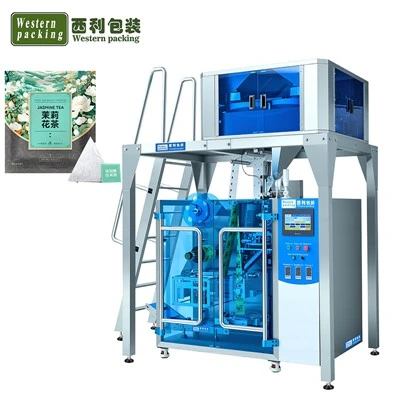
First, let’s get granular (pun intended) about what pharmaceutical granules actually are, because that’s where most missteps start. Pharma granules aren’t just small, solid particles—they’re often formulated with active pharmaceutical ingredients (APIs), which are highly sensitive to moisture, contamination, and static. Most are made for oral solid dosage forms (OSDs) like capsules, tablets, or sachets for over-the-counter meds, but some are for topical or injectable prepackaged doses too. Unlike food or industrial granules, which might have loose tolerances for particulates or minor cross-contamination, pharma granules require a full traceability trail and zero impurities that could compromise patient safety. That’s the core requirement that standard granule machines (built for cereal or laundry beads) can’t meet—but that’s also where our pharma-ready models shine.
Let’s talk about the hard, non-negotiable requirements that turn a regular granule packaging machine into one that’s suitable for pharmaceuticals. The biggest one? Material compatibility and cleanability. When you package pharma granules, you can’t have residual API from one batch contaminating the next. Our standard industrial granule machines might have carbon steel parts, which are cheap but porous and impossible to fully sanitize for high-potency APIs (even tiny traces can trigger patient reactions). For pharma, every wetted part—parts that touch the product, including hoppers, measuring chambers, chutes, and seal jaws—must be 316L stainless steel. That’s not a random spec: 316L has a low carbon content, making it corrosion-resistant, non-reactive with APIs, and smooth enough to pass strict cleanability testing per FDA’s Current Good Manufacturing Practices (CGMP) guidelines. We test every pharma model for “swab testing” after CIP (Clean-in-Place) cycles, meaning we swab surfaces and check for trace particles below 10 micrograms per square centimeter—way stricter than the standard for food packaging.
Next, we come to dosing accuracy. Pharmaceutical granules are often dosed in precise, tiny amounts: a single generic antibiotic capsule might hold 500mg of API, so even a 5% dosing error (25mg) is enough to make a dose ineffective or dangerous. Standard granule machines typically use volumetric dosing—measuring a fixed volume of granules, which works for bulk items like bird seed, but fails for pharma where granule density can shift with humidity or formulation changes. Our pharma-ready machines, by contrast, offer two dosing options tailored to pharma needs: high-precision gravimetric dosing for small batches, which weighs each individual dose with accuracy within ±0.5%, and semi-volumetric dosing with adjustable density calibration for medium-scale runs. I’ve seen a small compounding pharmacy switch from a cheap standard volumetric machine that had 12% dosing errors to our pharma model and cut their API waste by 80% in the first three months. That’s not a sales pitch—it’s a real win from a client who almost had a batch rejected by a local regulatory inspector.
Another critical factor: dust control and contamination prevention. Pharma granules, especially those for inhalation or high-potency APIs, generate fine dust that’s not just a mess—it’s a safety hazard for workers, and a cross-contamination risk for future batches. Standard granule machines usually have open hoppers and basic dust extraction, but our pharma models are sealed per Class 100 (now ISO 5) cleanroom standards for the product contact zone. That means the only access to the product path is via a HEPA-filtered air exchange system, and we have negative pressure built in to keep external air, dust, and microbes out. We also offer optional inert gas purging for moisture-sensitive APIs—something standard machines don’t have. A client last year packaging a new line of dry granulated antibiotics told us the inert gas feature kept their API’s moisture content below 2% (the threshold for stability) for 18 months, compared to 6 months with their old machine.
Now, let’s address the elephant in the room: regulations. The FDA, EMA, and other global regulatory bodies don’t make a special category for “granule packaging machines”—they apply CGMP to all equipment used in drug manufacturing. That means your machine has to be documented, calibrated, and validated for the specific product you’re packaging. I can’t tell you how many times a client has bought a used granule machine or a cheap import that looks the part, only to fail their FDA audit because they couldn’t provide documentation of material traceability, calibration logs, or cleaning validation. Our pharma granule packaging machines come with a full documentation package out of the box: material certificates for all 316L parts, validation protocols, calibration checklists, and step-by-step training for your team to run CGMP-aligned processes. We also offer on-site validation support for small and medium manufacturers who don’t have a dedicated regulatory team, which is a huge time-saver compared to trying to work through audits on your own.
Wait a second—does that mean every granule packaging machine can work for pharma? No. If your machine has carbon steel parts, no documentation, or only basic volumetric dosing, it’s not suitable. I’d never sell a standard granule machine to a pharma client, even if they beg for a lower price, because the risk of a regulatory failure or a product recall isn’t worth it. But if you’re a pharma manufacturer, contract packaging firm, or even a herbal supplement company that follows pharma guidelines (many do these days), a purpose-built pharma granule packaging machine is not just a possibility—it’s the most cost-effective, compliant choice for your operations.
Let’s use a real example to make this concrete. Last year, I worked with a 20-person contract packaging firm that specialized in generic OSDs. They were packaging 500mg paracetamol granules in 1g sachets for a regional hospital, using a standard granule machine that kept having dosing errors and failing cleaning checks. They were on track to get a warning letter from the FDA, so they called us to look at their options. We retrofitted one of our mid-range granule packaging machines to handle their specific sachet format, added gravimetric dosing, and updated the cleaning protocol to meet CGMP. Within 6 weeks, they passed their audit, cut their API waste by 75%, and increased their output by 20% because the machine ran faster than their old one without sacrificing accuracy. That’s the kind of outcome we’re here to deliver—not just selling equipment, but solving problems.
Now, let’s talk about what to look for if you’re shopping for a pharma granule packaging machine. First, ask for material specs: confirm all wetted parts are 316L stainless steel, not 304. 304 works for many food applications, but it’s not corrosion-resistant enough for pharma cleaning agents and APIs. Second, ask about dosing technology: if it’s only volumetric, keep looking. Gravimetric or semi-volumetric with density calibration is a must. Third, confirm documentation: will the machine come with all the certificates and validation materials you need for audits? If a supplier can’t provide that, walk away. Fourth, ask about cleanability and dust control: does the machine have a CIP system, or is it designed for manual clean-in-place that meets pharma standards? Does it have HEPA filtration for the product zone?
I know there are a lot of options out there, and it’s easy to get overwhelmed by specs and sales pitches. But the bottom line is this: a granule packaging machine can be used for pharmaceutical granules, but only if it’s purpose-built for that application. Don’t compromise on compliance—because when you’re packaging a product that goes into patients, the cost of a mistake is far higher than the cost of investing in the right equipment.
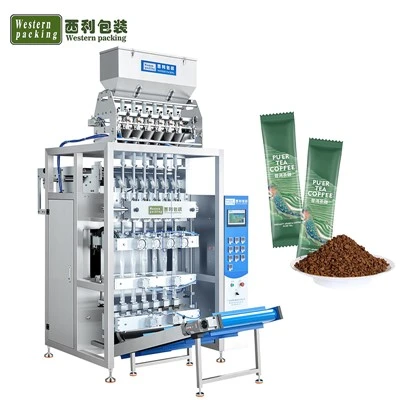
If you’re ready to talk through your specific needs—whether you’re packaging small batches of specialty pharma granules, scaling up a generic line, or dealing with a regulatory challenge—I’m here to help. Reach out to start a conversation about what our pharma-grade granule packaging machines can do for your operation. We’ll walk you through specs, case studies, and even help you build a plan to meet your compliance goals, no pressure, no fine print.
Filling Machine References
- U.S. Food and Drug Administration, "Current Good Manufacturing Practice, Final Rule," 21 CFR Part 211, 2023.
- International Organization for Standardization, "Medical Devices – Cleanrooms and Associated Controlled Environments," ISO 14644-1, 2015.
- European Medicines Agency, "Guideline on Good Manufacturing Practice for Medicinal Products for Human Use," Annex 15, 2022.
- Pharmaceutical Engineering Society, "Cleanability Validation for Pharmaceutical Manufacturing Equipment," Journal of Pharmaceutical Engineering, vol. 42, no. 3, 2022.
- FDA, "Guidance for Industry: Container Closure Systems for Packaging Human Drugs and Biologics," 1999.
Guangzhou Western Packing Co., Limited
Guangzhou Western Packing Co., Limited is one of the most professional granule packaging machine manufacturers and suppliers in China, also supports custom service. With abundant experience, we warmly welcome you to wholesale durable granule packaging machine at competitive price from our factory.
Address: No.3, Yilong street, Wulonggang, Zhongluotan Twon, Baiyun District, Guangzhou
E-mail: david@westernpacking.com
WebSite: https://www.westernpackingusa.com/
