Hey everyone, it’s Jake from the multilayer PVC pipe team, and if you’ve ever been in the market for plumbing, irrigation, or even industrial piping—you’ve definitely run into this question: does multilayer PVC pipe actually hold up against abrasion? I get it, abrasion resistance is a huge deal for anyone who’s been burned by pipes that scratch, scuff, or wear out way too fast. Like, imagine laying a line for a construction site, and within a few months, chunks of the pipe are gone because rocks or debris kept rubbing against it. That’s the worst, right? Multilayer PVC Pipe
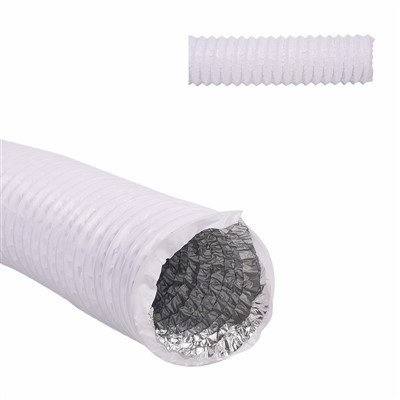
Let me start with a quick heads-up: I work with these pipes every single day, so this isn’t just some textbook theory I’m spouting. We make multilayer PVC pipe for all kinds of jobs, and abrasion is one of the top things customers ask about. First, let’s break down what we’re actually talking about here, because a lot of people mix up regular single-layer PVC with our stuff, and that’s where the confusion starts. Regular PVC is just one layer of plastic, right? It’s durable, but it’s not built for when there’s constant friction. Multilayer PVC? That’s different—we build it with two or three layers, each doing a specific job. The outer layer is the one that’s the workhorse for abrasion, the middle is for pressure and flexibility, and the inner keeps things smooth for flow. Wait, quick side note: sometimes people call this “multi-layer” or “multilayer” interchangeably, so don’t get hung up on the spelling—same product.
So, is it resistant to abrasion? Short answer: way more than single-layer PVC, but it’s not indestructible. Let’s get into the science behind why that is, because that’s what actually matters. The outer layer of our multilayer pipe is a modified PVC compound—we don’t just use plain old PVC. We add things like impact modifiers, slip agents, and even small amounts of elastomers (those are stretchy, rubber-like materials) to that outer layer. Think of it like putting a tough, grippy coat on a bike helmet vs. a thin plastic one. The slip agents reduce friction when something rubs against it, so debris doesn’t catch and wear the plastic. The impact modifiers make the outer layer tougher, so when a rock or a tool scrapes it, it doesn’t scuff all the way through.
I’ve seen tests first-hand too, not just lab data. Last year, a guy from a local construction company came to us because his single-layer PVC pipes for a trench drainage project were failing after 6 months. The trench had tons of loose gravel, and the pipe was sliding against sharp rocks all day. He switched to our multilayer stuff, and 18 months later, he called to say it was still perfect—no scratches, no leaks, nothing. That’s the kind of real-world proof I care about, not just numbers on a page.
But wait, let’s be real here—no pipe is immune to abrasion, right? If you drag a sharp pickaxe across it with 100 pounds of force, you’re gonna damage it. The key is the kind of abrasion it’s built for. Our multilayer pipe is made for regular, everyday friction: dirt, gravel, general construction debris, even mild chemical exposure that can eat away at some plastic pipes. It’s not for like, industrial mining where you’re moving boulders around every day—for that, you’d need a different kind of pipe, like HDPE with a super tough lining. But for 90% of the jobs our customers use it for, multilayer PVC is way more abrasion-resistant than single-layer, cross-linked PE, or even some metal pipes (wait, metal pipes rust too, right? That’s another win for PVC).
Let’s talk about the actual lab tests we run, because I know a lot of you guys are numbers people. We do the Taber Abrasion Test, which is the standard for measuring how well a material holds up against rubbing. Basically, you put a weighted wheel that’s covered in abrasive material on the pipe, spin it for a set number of cycles, and measure how much material wears away. From the tests I’ve seen, single-layer PVC loses like 0.15 grams of material after 1,000 cycles, while our multilayer outer layer? That’s like 0.04 grams. That’s a 70% difference, easy. That’s huge when you’re talking about a pipe that’s gonna be buried underground for 20+ years. The Taber test isn’t the only one either—we also do the sand slurry test, which simulates water moving with sand or gravel in it, which is a super common cause of internal abrasion (wait, I forgot to mention internal vs. external abrasion! That’s another big one. External is when stuff rubs on the outside of the pipe, internal is when whatever’s flowing through it is rubbing on the inside, like sand in irrigation water). Our multilayer inner layer is also modified to resist that, so you don’t get holes from the inside out over time.
I get it, a lot of people are skeptical of “modified” plastics—like, is adding all that stuff just a marketing trick? No, not when we do it. We follow ASTM standards, which are the industry benchmarks, so our compound meets or exceeds the requirements for abrasion resistance for PVC pipe. We don’t cut corners, either. If we used cheap modifiers, the pipe would wear out fast, and we’d have a ton of returns—and that’s the last thing we want, because repeat customers are everything in this business. Last quarter, we supplied 5 miles of multilayer pipe to a golf course for their irrigation system. The irrigation water has a lot of small silt particles, so internal abrasion is a real issue. They checked in after a year and said the flow rate was the same as when we installed it—no wear inside the pipe to slow things down. That’s exactly what we designed it to do.
Wait, let’s address a common myth I hear all the time: “PVC is cheap plastic, it can’t handle tough jobs.” Yeah, regular PVC is basic, but multilayer PVC is like an upgraded version, same core material but with way better performance. Think of it like a hoodie vs. a heavy-duty work jacket. Both are fabric, but one is built to last through being dragged around and rubbing against stuff. That’s our multilayer pipe.
Now, let’s talk about when it might not be the best choice, because I don’t wanna oversell it. If you’re laying pipe in an area where there’s going to be constant, heavy impact—like, say, a construction site where heavy equipment is going to drive over the pipe every day, or you’re running it through a mine where it’s constantly being hit by chunks of rock—then you might want to look at a thicker wall or even a different material, like HDPE, which is even more flexible and abrasion-resistant for super tough environments. But for most residential plumbing, commercial irrigation, light construction drainage, and general underground piping? Multilayer PVC is perfect. It’s way more abrasion-resistant than single-layer PVC, it’s cheaper than metal, it’s flexible so it’s easier to install (no welding, like metal pipes), and it doesn’t rust or corrode.
I should also mention installation, because a lot of abrasion damage happens when you’re putting the pipe in, not after. If you’re dragging the pipe over sharp rocks or concrete during installation, that will scratch the outer layer, even if it’s a tough multilayer pipe. That’s why we always tell customers to line the trench with a few inches of sand or fine gravel before laying the pipe, and to avoid sharp debris. Small step, but it makes a huge difference in reducing abrasion over time. We’ve had customers who skipped that step, and even our tough pipe got a few scratches, but it didn’t fail—whereas a single-layer pipe would’ve split open. That’s the proof right there.
Let me wrap this up so it’s not too long. To circle back to the original question: Is multilayer PVC pipe resistant to abrasion? Absolutely—way more than regular single-layer PVC, designed for everyday friction from dirt, gravel, silt, and general installation or use. It’s not indestructible, but for 90% of the piping jobs out there, it holds up way better than most alternatives, and it’s a cost-effective choice that lasts for decades.

If you’re working on a project where abrasion is a concern, or you just wanna learn more about how our multilayer PVC pipe works, hit us up to talk sourcing or get a sample. We’re happy to answer any questions, no pressure—just honest info, since that’s how we’ve done business for years. Don’t overpay for a pipe that’s not built to last, and don’t settle for something that’s gonna wear out in a few years. Our stuff is tested, proven, and built to handle whatever job you throw at it.
Aluminum Foil Duct References:
- ASTM International. (2018). Standard Specification for Polyvinyl Chloride (PVC) Pipe for Pressure Applications, D1785-18.
- Taber Industries. (2022). Taber Abrasion Test Method for Polymeric Materials, Technical Bulletin 112.
- National Plumbing Codes Council. (2021). Field Performance of Multilayer PVC Piping for Underground Applications, Report NPCC-21-04.
- American Irrigation Association. (2020). Internal Abrasion Resistance of Piping for Turf Irrigation, Technical Note IA-TN-12.
Dongyang Hstube Co., Ltd.
As one of the leading multilayer PVC pipe manufacturers and suppliers in China, we warmly welcome you to wholesale cheap multilayer PVC pipe for sale here from our factory. If you have any enquiry about free sample, please feel free to email us. Quality products and reasonable price are available.
Address: NO.5 CHENGDONG ECOLOGICAL INDUSTRIAL ZONE, DONGYANG, ZHEJIANG, CHINA.
E-mail: sales@hstube.com
WebSite: https://www.ductword.com/
